



Creating a will is one of the most important steps in protecting your legacy and ensuring that your wishes are honored. However, not all wills hold up in court. In fact, certain legal or procedural missteps can render a will invalid. At Katzner Law Group, our estate planning attorneys frequently assist individuals and families in reviewing and drafting wills to avoid such pitfalls. In this guide, we explain what voids a will, why it matters, and how to make sure your estate plan is secure.
What Does It Mean to Void a Will?
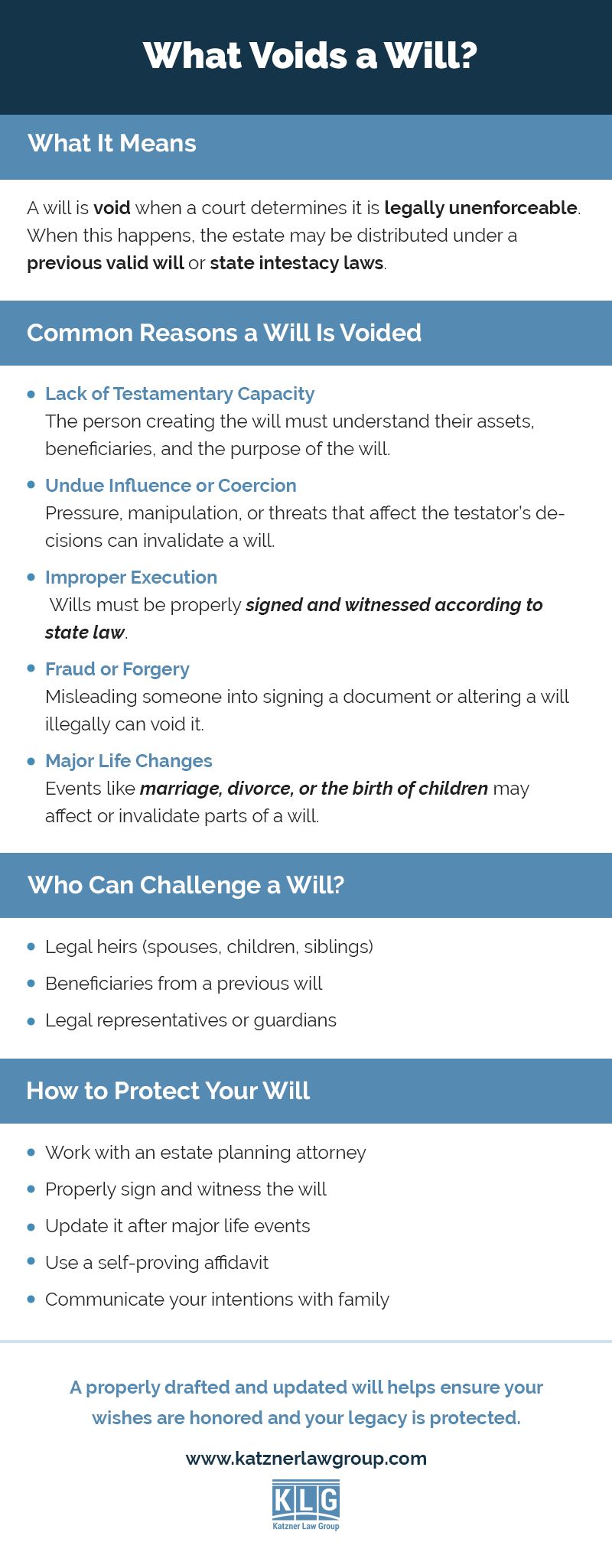
A will is considered void when a court determines that it is legally unenforceable. This means that the document, in whole or in part, fails to meet legal standards or was created under circumstances that undermine its legitimacy. When a will is declared invalid, the court may instead enforce a prior valid will or distribute the estate based on state intestacy laws.
Common reasons a will may be voided include:
- Lack of testamentary capacity
- Undue influence or coercion
- Improper execution (not signed or witnessed correctly)
- Fraud or forgery
- Major life events that affect the terms of the will (e.g., divorce, marriage)
Each of these issues can create significant legal conflict among heirs, delay probate, and derail the decedent’s final wishes.
Lack of Testamentary Capacity
One of the foundational requirements for a valid will is testamentary capacity. This means that, at the time of signing the will, the person (called the “testator”) must:
- Understand that they are creating a will and what it means.
- Know the nature and extent of their property.
- Recognize their relationship to the people named in the will (and those who would normally inherit).
This issue often raises related questions, such as can a person with Alzheimer’s change their will? The answer depends on whether the individual still had sufficient testamentary capacity at the time the changes were made, which courts evaluate based on medical evidence and surrounding circumstances.
If the testator suffered from a mental illness, dementia, or cognitive impairment at the time the will was executed, it may be challenged and potentially voided.
Courts typically rely on medical records, witness testimony, and expert evaluations to determine whether a testator had sufficient mental capacity. According to New York State Unified Court System, evidence of mental soundness is essential when probating a will.
Undue Influence or Coercion
Another common reason a will may be declared invalid is if it was created under undue influence. This happens when someone exerts pressure over the testator to manipulate the contents of the will in their favor.
For example, if a caregiver isolates an elderly individual and persuades them to change their will to benefit the caregiver, this may be considered undue influence. Coercion, threats, or manipulation can all lead to legal challenges.
Red flags that could signal undue influence include:
- Last-minute changes to the will
- Exclusion of close family members without clear reasoning
- The primary beneficiary was directly involved in preparing or executing the will
A court may declare a will void if undue influence is proven.
Online Appointment Request Call Our OfficeContact an Asset Protection Attorney Near You
 855-528-9637
Improper Execution
Wills must be signed and witnessed according to state laws to be valid. In New York, for example, a will must be:
- Signed by the testator (or at their direction)
- Witnessed by at least two individuals who are not beneficiaries
- Signed in the presence of those witnesses
Failing to meet any of these procedural requirements can void a will. As noted by Cornell Law School, proper execution is a critical component of estate planning.
Fraud or Forgery
Fraud occurs when the testator is misled into signing a will or a different document than they believe they are signing. Forgery involves someone other than the testator signing the will or altering it without permission.
Both are grounds to void a will. To avoid allegations of fraud, it’s essential to:
- Sign your will in front of impartial witnesses
- Work with an attorney to ensure documents are properly drafted and protected
Forgery cases often require forensic handwriting analysis or testimony to prove the document was tampered with.
Major Life Changes
Even if a will is initially valid, certain life events may unintentionally void or supersede its terms. These events include:
- Marriage: In some states, marriage after the execution of a will can invalidate the document.
- Divorce: Many jurisdictions, including New York, automatically revoke any provisions in favor of a former spouse unless otherwise stated.
- Birth or adoption of children: If children are born or adopted after the will is written, and they are not included, the will could be partially invalidated.
To prevent complications, it’s crucial to update your will regularly after major life changes.
Who Can Challenge a Will?
The following individuals typically have standing to challenge a will:
- Heirs at law (e.g., spouses, children, siblings)
- Beneficiaries named in a prior will
- Legal guardians or representatives of incapacitated individuals
These parties may file a formal objection in probate court, triggering a will contest. If the court agrees that the will is invalid for any of the reasons listed above, it may be voided entirely or in part.
How to Protect Your Will From Being Voided
To ensure your will is legally enforceable and less likely to be challenged:
- Work with an experienced estate planning attorney.
- Have the will properly executed with qualified witnesses.
- Avoid using online or generic will templates without legal guidance (goes hand in hand with #1 above).
- Include a self-proving affidavit signed in front of a notary public.
- Discuss your intentions with loved ones to reduce surprise and suspicion.
- Revisit and revise your will after major life events.
- Consider medical evaluations if there is any concern about capacity.
Taking these precautions will reduce the risk that your will is contested or declared void.
Call Katzner Law Group for Estate Planning Help
Worried about whether your will is valid or if your loved one’s estate plan might be challenged? The estate planning professionals at Katzner Law Group can help. From drafting legally sound wills to navigating will contests, we ensure your wishes are protected and your estate is handled with care.
For personalized guidance, contact us today or call 855-528-9637 to schedule a consultation. Our experienced team is here to help you create an estate plan that stands the test of time.
